
ArtisanLab Case Study | Prescriptive Maintenance for CNC Cutting Tools
Unplanned downtime rarely begins when a machine stops. Before that point, there are signals: wear, particle buildup, and operating cycles that reduce the useful life of critical components.
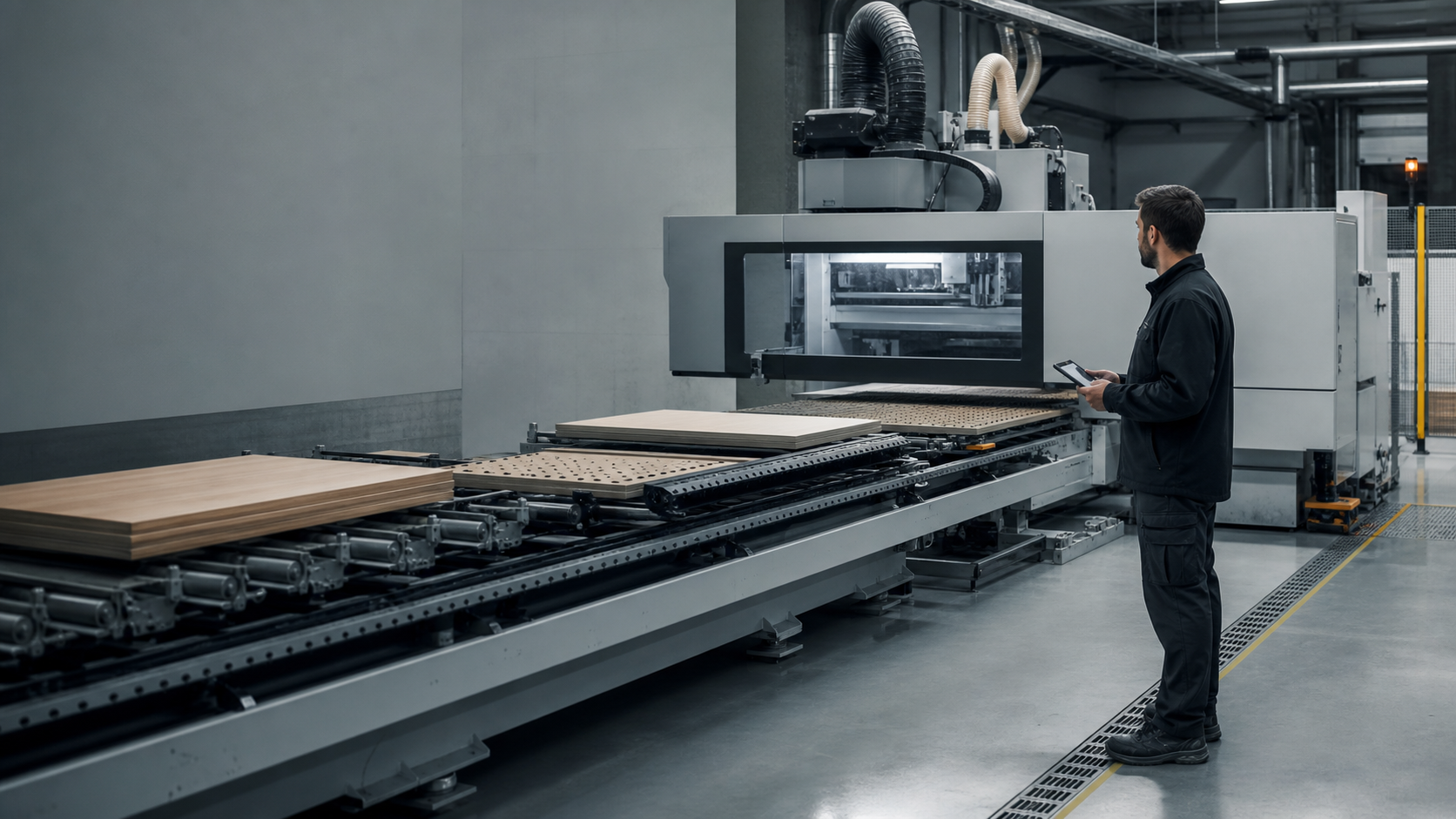
At ArtisanLab, a made-to-order manufacturer of accessories, furniture, and decorative products using wood, metals, and mechanical and laser CNC equipment, MadeOS helped turn those signals into prescriptive maintenance actions. The goal was to anticipate cutting-tool wear, protect production continuity, and reduce exposure to unplanned downtime.
The challenge: tool failures that interrupt production
Cutting tools wear down because of residual particle buildup from each machining process and repeated operating cycles. Once wear reaches a critical point, the tool can fail completely, stopping production until it is replaced.
Each event could involve approximately:
-
USD 600 per cutting tool.
-
USD 1,500 to USD 2,800 in impact per customer.
-
Between 8 and 15 customers affected per month.
-
At least USD 12,000 in potential monthly losses.
A repair could also take up to 15 days when the required CNC replacement part was not available. Historically, the pilot machines experienced three to four unplanned downtime events per year.
From operating data to remaining useful life
Working with ArtisanLab, MadeOS identified two key variables for estimating the remaining useful life of cutting tools: cutting feed rate and operating hours.
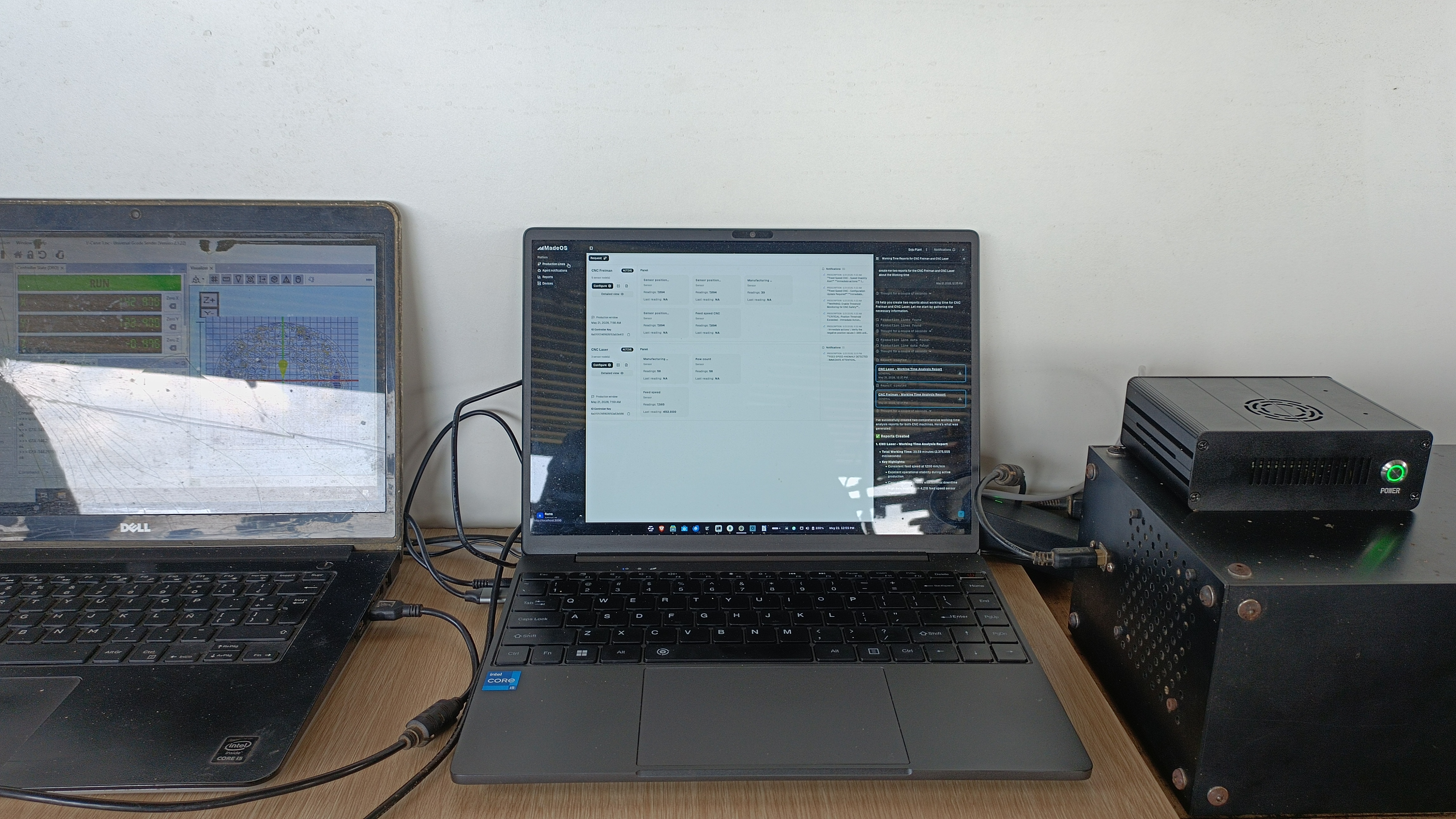
MadeOS integrated with the CNC machines to track these variables in real time and generate predictions during operation. The predictions are compared with the failure ranges and conditions previously identified by the operators.
The operating workflow shifted from reactive failure response to early intervention:
Usage signals → remaining useful life estimate → prescriptive alert → inventory review → planned maintenance
The objective was to provide maintenance alerts with operational context, review spare-part availability, and estimate Remaining Useful Life (RUL) in operating hours.
The implementation: learning from real operations
The integration began at the end of January 2026. During the first month, the initial recommendations had limited operational value because there was not yet enough machine history; analyses were generated from live data.
After the first parameter adjustments, the prescriptions became more aligned with the operating team’s criteria. More than 85% of alerts and prescriptions have been addressed; the rest were dismissed by operators based on the specific operating conditions.
RUL estimates are generated during each production window defined by the operator. This provides early monitoring of failure conditions throughout the monitored operation.
Pilot result: fewer unplanned downtime events
During the first six months of the pilot - from January through June 2026 - only one unplanned downtime event occurred.
Based on a historical rate of three to four failures per machine per year, the expected outcome over six months was between 1.5 and 2 downtime events, with a historical average of 1.75.
| Historical reference | Expected events in 6 months | Actual events | Reduction |
|---|---|---|---|
| 3 failures/year | 1.5 | 1 | 33% |
| Average of 3.5 failures/year | 1.75 | 1 | 43% |
| 4 failures/year | 2 | 1 | 50% |
Against the historical baseline, the pilot achieved an estimated 33% to 50% reduction in unplanned downtime, or 43% when compared with the historical average.
What comes next: maintenance based on actual usage
The next step is to turn the pilot’s learning into a repeatable practice: link maintenance and inventory reviews to each asset’s actual usage, continue refining RUL parameters, and use alerts as a decision-support tool for operators.
That is the role of MadeOS: turning signals from machines, sensors, PLCs, cameras, and vehicle telemetry into precise actions that help protect uptime, utilization, throughput, and quality across factories and fleets.
A note on results
These results reflect the scope, pilot machines, and evaluation period at ArtisanLab during the first six months of 2026. The reported reduction compares one observed unplanned downtime event with a historical rate of three to four annual failures per machine. It does not guarantee results for every asset, process, or facility; each implementation requires its own operational baseline, maintenance criteria, and operating conditions.
Where is your operation losing value?
An Operational Loss Baseline helps identify the priority loss, the critical asset or vehicle system, available signals, and the first action that can protect operations.
Build your Operational Loss Baseline at madeos.ai/#mady.